Chapter 6 / 6 · Science

The Laboratory of the World

From the polio vaccine to the Moon landings and gene editing, American research changed what humans can do. Its funding, its prices and its public trust are now under strain.

8 min read25 sources

Photo: NASA, ESA, CSA, STScI · Public domain

327
Science Nobel awards (1901–2025) to laureates with a US affiliation, about half of all 662
Nobel Prize API; author's count, 2025
$47.5B
NIH funding enacted by Congress for fiscal year 2026
Congressional Research Service, 2026
26M
Lives PEPFAR is credited with saving since 2003, a State Department estimate
KFF, citing the State Department, 2026
12
American astronauts who walked on the Moon, 1969–1972
NASA
1.7%
Share of US research articles among the world's top 1% most cited in 2022 (China: 1.3%)
NSF Science and Engineering Indicators, 2026

After the Second World War, the United States made a bet: governments should pay for basic research, and universities, companies and hospitals would turn the discoveries into medicines, machines and knowledge. The results reached far beyond America. The polio vaccine, the Moon landings, the Human Genome Project, CRISPR gene editing and the mRNA vaccines all came out of this system, often with partners abroad. This chapter looks at the numbers behind that record: Nobel prizes, research budgets, publications and lives saved. It also looks at the hard questions, from high drug prices and falling life expectancy relative to peers to recent funding cuts and the damage done when science betrayed people's trust.

Medicine that crossed borders

In the early 1950s polio terrified American parents. Infections peaked in 1952, with more than 21,000 paralytic cases in the United States 7. Jonas Salk's inactivated vaccine was licensed in 1955, and Albert Sabin's oral vaccine followed between 1961 and 1963. The last case of wild polio caught inside the United States was in 1979 7.

The oral vaccine became the workhorse of a global campaign launched in 1988. Since then, wild polio cases have fallen by more than 99%, from an estimated 350,000 cases in over 125 countries to just two countries where the virus is still endemic 6. The WHO estimates that more than 20 million people are walking today who would otherwise have been paralysed 6.

Salk's vaccine was never patented. When the journalist Edward R. Murrow asked him on television who owned it, Salk answered that the people did 8. His answer is still quoted in debates about who should profit from medicines developed with public or charitable money.

A more recent breakthrough began in a lab at the University of Pennsylvania. Katalin Karikó and Drew Weissman found that small chemical changes to messenger RNA (mRNA) stopped it from triggering harmful inflammation, and they won the 2023 Nobel Prize for it 1. When COVID-19 struck, that discovery made fast-to-build mRNA vaccines possible. One modelling study estimated that COVID-19 vaccines of all types prevented 14.4 million deaths in their first year, or 19.8 million when excess deaths are counted 9.

Genetics followed a similar path. The Human Genome Project, led in the US by the National Institutes of Health and the Department of Energy, ran from 1990 to 2003 and involved 20 centers in six countries 10. Its 2003 sequence covered about 92% of the human genome; an international team filled the last gaps in 2022 10. In 2020 Jennifer Doudna of the University of California and Emmanuelle Charpentier, working in Germany, shared the Chemistry Nobel for the CRISPR gene-editing method 1. In December 2023 the US Food and Drug Administration approved Casgevy for sickle cell disease, the first therapy it had approved that uses CRISPR 11. Doctors take a patient's own blood stem cells, edit their DNA so they make more fetal hemoglobin, and put them back. Sickle cell disease affects about 100,000 people in the US, most of them African American 11.

American science also fought hunger and disease overseas. Norman Borlaug spent decades breeding high-yield, disease-resistant wheat in a Mexico program backed by the Rockefeller Foundation, then helped bring it to India and Pakistan 17. PEPFAR, the US program against HIV/AIDS started in 2003, is credited by the State Department with saving 26 million lives. It was disrupted by a stop-work order in January 2025, but Congress still provided $4.8 billion for it in fiscal year 2026, plus $1.25 billion for the international Global Fund to Fight AIDS, Tuberculosis and Malaria 16.

Well, the people, I would say. There is no patent. Could you patent the sun?
Jonas Salkasked by Edward R. Murrow who owned the polio vaccine patent, 1955
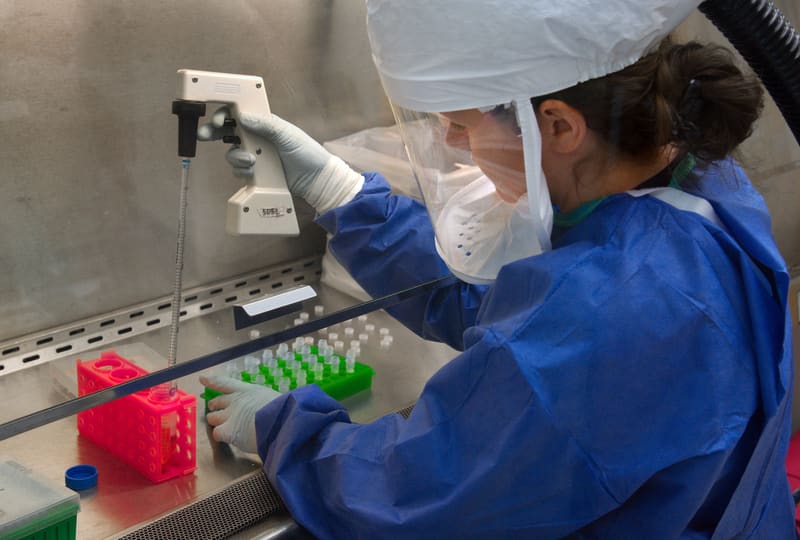
A researcher in protective gloves handling samples in a laboratory
A scientist at work in a federal health laboratory. NIH and CDC labs, plus the university labs NIH funds, anchor much of American biomedical research.Photo: James Gathany, CDC · Public domain

The engine: NIH funding

The National Institutes of Health describes itself as the largest public funder of biomedical research in the world 3. About 82% of its budget goes out as grants and contracts that support more than 300,000 researchers at over 2,500 universities, hospitals and institutes. Roughly 6,000 scientists also work in NIH's own labs, mostly in Bethesda, Maryland 2. Much of the basic biology behind modern drugs and diagnostic tests was first worked out with NIH money.

NIH funding, fiscal years 1996–2026

Program level, billions of US dollars: current dollars vs. constant 2024 dollars adjusted for biomedical research costs

$0B$15B$30B$45B$60B 19962003201020172026 Current dollars $47.5BConstant FY2024 dollars $45.1B
Current dollarsConstant FY2024 dollars
Source: Congressional Research Service, R43341, updated May 2026, using NIH Budget Office data and the Biomedical Research and Development Price Index. Excludes ARPA-H and COVID-19 emergency funds.

The budget doubled between 1998 and 2003, then stalled. After adjusting for rising research costs, NIH's fiscal 2026 budget is about 10% below its 2003 peak 2.

In 2025 the White House asked Congress to cut NIH by 40.6%, to $27.9 billion, and to consolidate its 24 research institutes into eight. Congress refused. It set fiscal 2026 funding at $47.5 billion, 1% more than the year before, and kept the existing structure 2.

Money is not the only change. NIH has moved toward paying some grants for several years up front, which means fewer but larger awards. It funded 10,086 new competing research grants in fiscal 2024 and 6,095 in fiscal 2025 2. A February 2025 policy capping overhead payments to universities at 15% was blocked by a federal court, a ruling upheld on appeal in January 2026 2.

Counting the Nobels

Nobel counts depend on how you count. Here we used the Nobel Foundation's own data and counted each award in physics, chemistry, and physiology or medicine from 1901 to 2025. An award counts for a country if the laureate listed at least one institution there at the time of the prize, using today's borders. By this measure, 327 of the 662 science awards went to people working in the United States 1.

Science Nobel awards by country of affiliation, 1901–2025

Physics, chemistry, and physiology or medicine. An award counts for a country if the laureate listed an institution there when the prize was given (present-day borders).

  • United States 327
  • United Kingdom 91
  • Germany 72
  • France 36
  • Switzerland 25
  • Japan 21
  • Sweden 17
  • Russia 11
Source: Author's count from the Nobel Prize API, Nobel Prize Outreach, data through the 2025 prizes. Laureates with institutions in two countries count for both.

Many of these laureates were born elsewhere. Only 216 of the 662 awards went to people born in what is now the United States, so American labs have drawn talent from around the world 1. Counting by citizenship, or only by a laureate's first-listed institution (319 awards), gives slightly different totals, but the US leads under every method.

The lead has grown over time. Since 2000, 120 of 202 science awards (59%) went to US-affiliated laureates, and in 2025 six of the nine science laureates worked at American institutions 1. By field, US-affiliated laureates account for 123 medicine awards, 115 in physics and 89 in chemistry 1.

Footprints on the Moon

The space race began as a Cold War contest, but it produced a large body of science. Apollo 11 made the first human landing on the Moon in 1969. Between 1969 and 1972, 12 American astronauts walked on its surface 12.

They brought home 382 kilograms of rock and soil 12. Scientists are still studying those samples decades later, using tools that did not exist when the astronauts collected them. Apollo was expensive and driven by competition with the Soviet Union, but it left a scientific archive that researchers around the world still draw on.

Robots have carried the work further. In 2021 NASA's Perseverance rover landed on Mars carrying a small helicopter, Ingenuity. On April 19 of that year Ingenuity made the first powered, controlled flight by an aircraft on another planet 14.
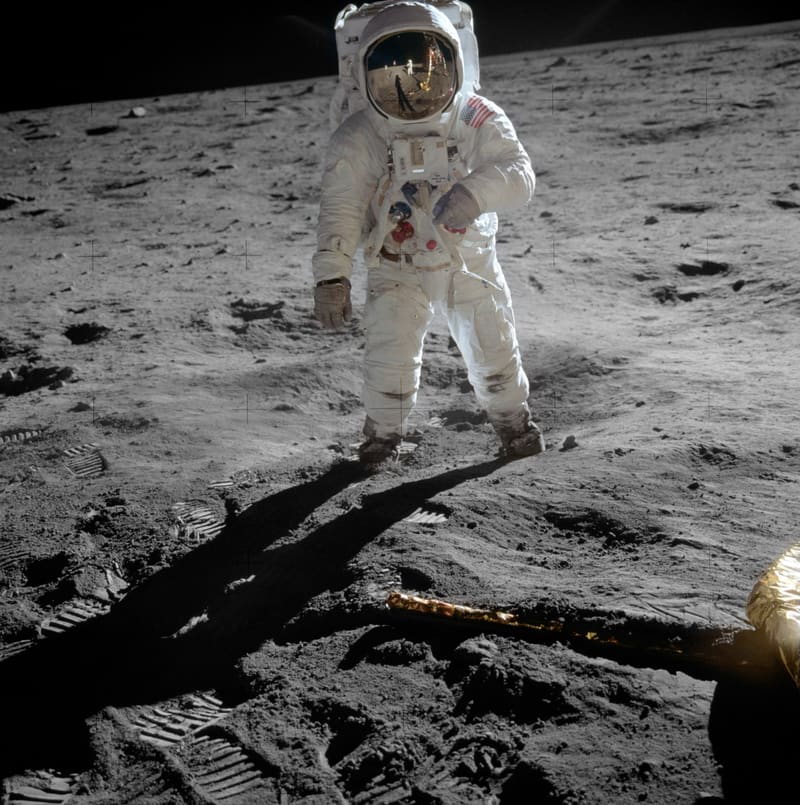
An astronaut in a white spacesuit standing on the grey surface of the Moon
Buzz Aldrin on the lunar surface during Apollo 11, July 1969. Neil Armstrong took the photograph.Photo: Neil Armstrong · Public domain

Eyes on the deep universe

The Hubble Space Telescope launched aboard the space shuttle Discovery on April 24, 1990. Its first pictures were blurry: the edge of its main mirror had been ground too flat by a fraction of the width of a human hair 14. Engineers designed corrective optics, and astronauts installed them in orbit. Thanks to five servicing missions, Hubble has kept working for more than 30 years 14. Its images helped astronomers measure the age of the universe and watch changes on planets in our own solar system.

Its successor, the James Webb Space Telescope, launched on December 25, 2021, on a European Ariane 5 rocket from French Guiana 13. Webb is led by NASA in partnership with the European and Canadian space agencies 13. It sees in infrared light, which lets it look through dust clouds where stars are born and detect faint galaxies from the early universe.

Both telescopes show how 'American' science usually works in practice. NASA leads and pays most of the cost, but partner countries supply instruments, launches and scientists, and astronomers around the world compete for observing time.
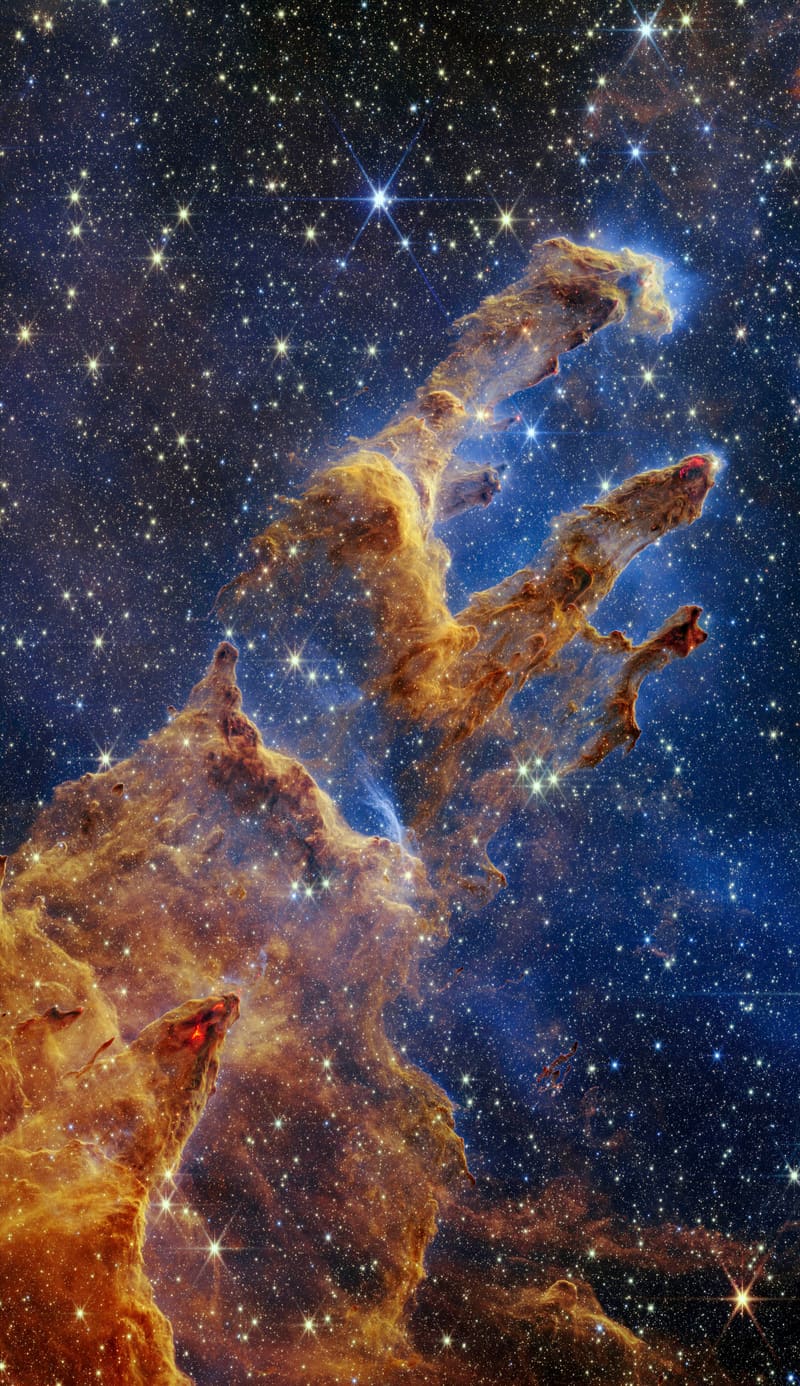
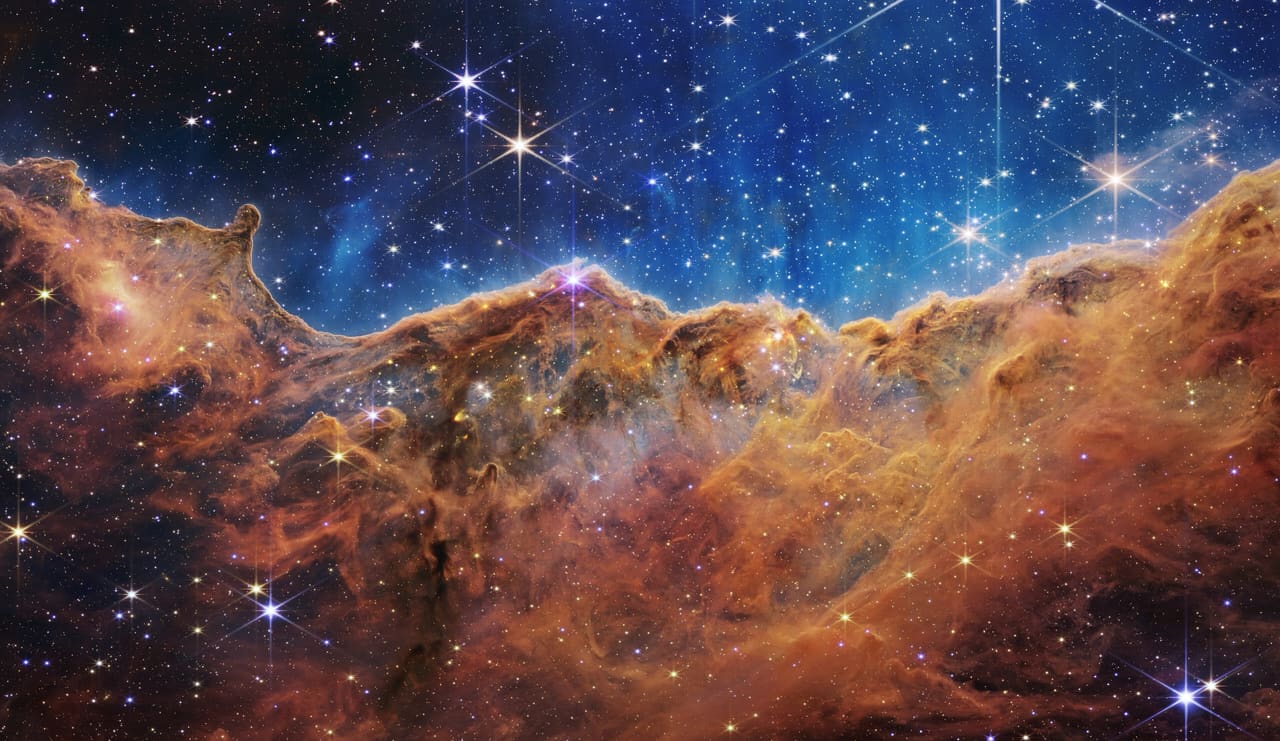
Towering columns of orange and brown gas and dust with bright stars against a dark background
The Pillars of Creation as seen by the James Webb Space Telescope. Its infrared cameras reveal young stars hidden inside clouds of gas and dust.Photo: NASA, ESA, CSA, STScI; image processing Joseph DePasquale, Anton M. Koekemoer, Alyssa Pagan (STScI) · Public domain

Watching the planet

Since November 2, 2000, the International Space Station has never been empty. By 2025 more than 290 people from 26 countries had visited this laboratory in orbit, which is run by the US together with Russia, Europe, Japan and Canada 15.

Some of the most useful space science points back at Earth. Landsat, a NASA and US Geological Survey program, has photographed the planet since its first launch on July 23, 1972, and holds the longest continuous space-based record of Earth's land 18. In 2008 the USGS made the images free to everyone. Farmers, city planners and climate scientists around the world now use them to track crops, forests, ice and urban growth. Because the record is long and consistent, researchers can compare the same place across five decades and see slow changes such as shrinking glaciers or spreading suburbs.

Weather forecasting relies on the National Oceanic and Atmospheric Administration (NOAA), which runs the National Weather Service, weather satellites and ocean and climate research labs 19. For fiscal year 2026 the administration proposed eliminating NOAA's main research office, including its climate programs. Congress kept the office, though it cut that office's budget by nearly 10% and gave the Weather Service 8% more 19. In total, Congress provided about $6.6 billion for NOAA's main accounts, $1.6 billion more than the administration had requested 19.
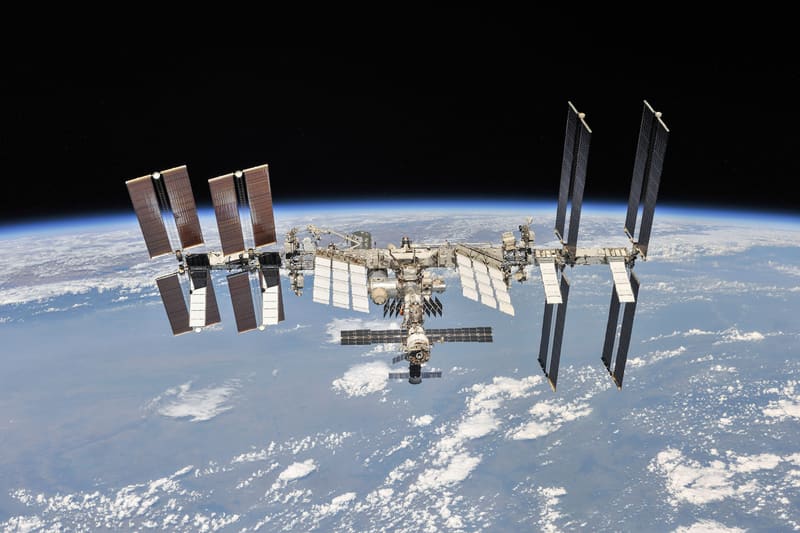
The International Space Station with its large solar panels, seen against the Earth
The International Space Station, continuously occupied since November 2000 and built and operated by five space agencies.Photo: NASA/Roscosmos · Public domain

Who publishes the most science?

Counting research papers is one way to measure a country's science. By that measure China overtook the United States in 2016. By 2024 China was publishing more than 1 million science and engineering articles a year, about 31% of the world total, compared with 12% for the US 4. US output has stayed roughly flat, at about 428,000 articles in 2014 and 440,000 in 2024, while India climbed to third place with about 258,000 4.

Science and engineering articles published, 2014–2024

Thousands of peer-reviewed articles per year, by authors' country (fractional counting)

0K300K600K900K1,200K 201420162018202020222024 United States 440KChina 1,079KIndia 258K
United StatesChinaIndia
Source: National Science Board / NCSES, The State of U.S. Science and Engineering 2026, based on Scopus data

Volume is not the same as influence. In 2022, 1.7% of US articles ranked among the world's top 1% most cited, compared with 1.3% for China. The US had the higher rate in most fields, including health, physics and computer science 4.

The gap in top-tier journals is closing too. In the Nature Index 2026 rankings, which track articles in 178 selected high-quality journals, China ranked first and the US second. China's output there grew 22.4% from 2024 to 2025, while the US grew 4.2%. The US still led in health sciences and social sciences 5.

These numbers measure output, not quality alone, and each method has blind spots. Taken together they point the same way: the US remains a leading source of high-impact research, but it is no longer the largest producer, and its lead in top journals is narrowing.
Timeline

Milestones in American science

Key moments from the postwar research boom to today's funding battles.

  1. 1944

    Borlaug goes to Mexico

    Norman Borlaug joins a Rockefeller Foundation and Mexican government wheat program, starting work that grows into the Green Revolution.

  2. 1955

    Polio vaccine licensed

    Jonas Salk's inactivated polio vaccine is licensed in the United States. US cases fall sharply over the next few years.

  3. 1969

    Apollo 11 lands

    Neil Armstrong and Buzz Aldrin become the first humans to walk on the Moon. Ten more Americans follow by 1972.

  4. 1972

    Landsat begins

    The first Landsat satellite launches, starting the longest continuous record of Earth's land from space.

  5. 1979

    Last homegrown polio case

    The last case of wild polio caught inside the United States is recorded.

  6. 1983

    McClintock's Nobel

    Barbara McClintock wins an unshared Nobel Prize for discovering 'jumping genes', decades after her first findings.

  7. 1990

    Hubble and the genome

    Hubble launches in April, and the Human Genome Project begins its 13-year effort to read human DNA.

  8. 2000

    Crew arrives on the ISS

    The first long-term crew arrives on the International Space Station on November 2. People have lived aboard ever since.

  9. 2003

    Genome and PEPFAR

    The Human Genome Project announces its finished sequence in April. The same year, the US launches PEPFAR to fight HIV/AIDS.

  10. 2021

    Mars flight and Webb

    Ingenuity makes the first powered flight on another planet, and the James Webb Space Telescope launches on Christmas Day.

  11. 2023

    First CRISPR therapy

    The FDA approves Casgevy for sickle cell disease. Karikó and Weissman win the Nobel for work behind the mRNA vaccines.

  12. 2025

    Grant terminations

    NIH terminates hundreds of research grants and the White House proposes a 40% budget cut. Congress later keeps NIH funding roughly flat.

People

People who changed science

Four Americans whose work reached far beyond the United States.

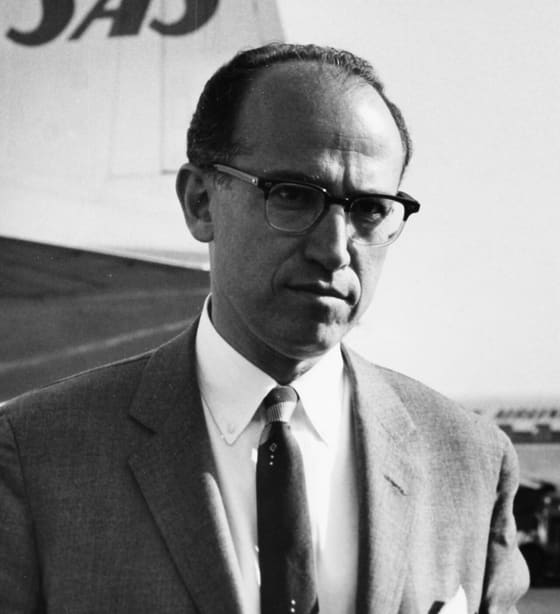
Jonas Salk
1914–1995

Jonas Salk

Virologist, developer of the first polio vaccine

Salk developed an inactivated polio vaccine at the University of Pittsburgh, and it was licensed in 1955 after a huge national field trial. Asked who owned the patent, he replied that there was none. He later founded the Salk Institute in California, which still studies biology and disease.

Photo: SAS Scandinavian Airlines · Public domain
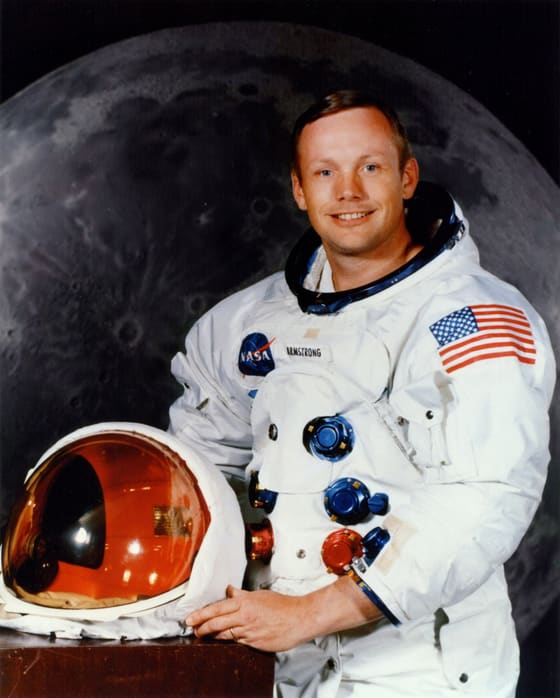
Neil Armstrong
1930–2012

Neil Armstrong

Astronaut, commander of Apollo 11

A former Navy pilot and test pilot, Armstrong became the first person to step onto the Moon on July 20, 1969. He and Buzz Aldrin spent about two and a half hours outside, collecting samples and setting up experiments. Afterwards he taught aerospace engineering and mostly stayed out of public life.

Photo: NASA · Public domain
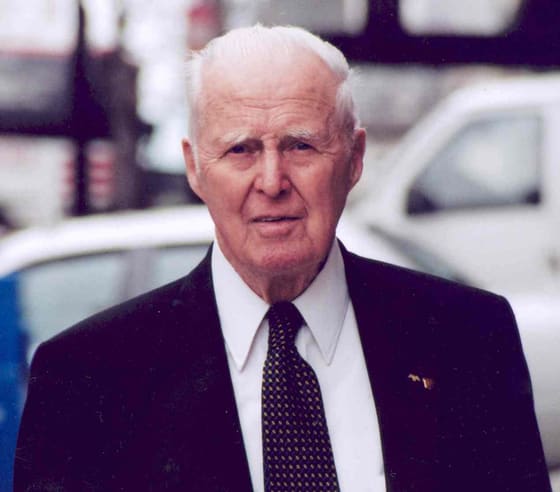
Norman Borlaug
1914–2009

Norman Borlaug

Plant scientist, Nobel Peace Prize 1970

Born on an Iowa farm, Borlaug spent decades in Mexico breeding short-stemmed, high-yield, disease-resistant wheat. He then helped farmers in India and Pakistan adopt it. He is often called the father of the Green Revolution, and he received the 1970 Nobel Peace Prize for his fight against hunger.

Photo: Ben Zinner, USAID · Public domain
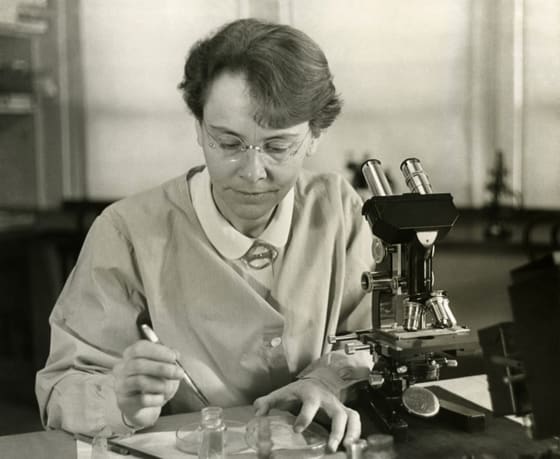
Barbara McClintock
1902–1992

Barbara McClintock

Geneticist, Nobel Prize in Physiology or Medicine 1983

Studying maize at Cold Spring Harbor Laboratory in New York, McClintock found that some genes can move around on chromosomes. Many colleagues ignored the idea for years. In 1983 she became the first woman to win an unshared Nobel Prize in Physiology or Medicine, recognized for her discovery of mobile genetic elements.

Challenges & debates

The debate

American science has a strong record, but also serious costs and failures. These are the arguments people make about it today.

Science depends on public trust and public money, so it helps to hear the strongest case on each side before reaching a verdict.

Do Americans pay too much for medicines?

Critics argue

In 2022 US prescription drug prices were 2.78 times those in 33 other high-income countries, and 4.22 times as high for brand-name drugs 22.

Much of the early research behind new drugs is paid for by taxpayers through NIH grants, yet patients still face high prices at the pharmacy 2.

Supporters respond

Generic drugs, about 90% of US prescriptions, cost less in the US than the average abroad: about 67% of the price elsewhere 22.

High prices for new drugs reward companies for risky research. Some argue that if Americans paid less, the whole world would get fewer new medicines.

Are recent federal research cuts reform or damage?

Critics argue

Between February 28 and April 8, 2025, NIH terminated 694 grants across 24 of its institutes and centers, affecting more than $1.8 billion in funding 23.

The fiscal 2026 request would have cut NIH by 40.6%. A plan to cap overhead payments to universities at 15% was blocked in federal court 2.

Supporters respond

The administration argued that NIH needed restructuring to focus on 'true science' and make better use of federal funds 2.

Congress rejected the deepest cuts and set fiscal 2026 NIH funding 1% higher than the year before, so the core system remains funded 2.

Why don't Americans live as long as people in other rich countries?

Critics argue

US life expectancy was 78.4 years in 2023, 2.7 years below the OECD average, despite the country's research strength 21.

World-class labs do little for people who can't afford care or who live with high rates of chronic disease and overdose deaths.

Supporters respond

Life expectancy rose to 79.0 years in 2024, a gain of 0.6 years, as COVID-19 deaths fell and dropped out of the ten leading causes of death 20.

Much of the gap comes from factors such as accidents, drugs and diet rather than the quality of medical science, and US breakthroughs raise life expectancy abroad too.

Has science earned back public trust?

Critics argue

From 1932 to 1972 the US Public Health Service watched 399 Black men with syphilis go untreated at Tuskegee, without informed consent, even after penicillin was widely available 24.

Trust has split along party lines: 90% of Democrats but only 65% of Republicans have at least a fair amount of confidence in scientists 25.

Supporters respond

Tuskegee led to sweeping changes in research ethics, a $10 million settlement and a presidential apology in 1997 24.

Overall trust is still high. In 2025, 77% of US adults said they had at least a fair amount of confidence in scientists to act in the public's interest 25.

Did you know?

Did you know?

6 of 9

Science Nobel laureates in 2025 who worked at American institutions 1.

1M+

Science and engineering articles published by China in 2024, more than twice the US total 4.

92%

Share of the human genome read by 2003. The last gaps were filled only in 2022 10.

290+

People from 26 countries who had visited the International Space Station by 2025 15.

Sources

Where the numbers come from

Every figure on this page links to a primary or reputable source. Numbers are the latest available at the time of writing.

  1. Nobel Prize Outreach, Nobel Prize API v2.1: laureates, prizes and affiliations, 1901–2025 (accessed September 2026) — api.nobelprize.org
  2. Congressional Research Service, National Institutes of Health (NIH) Funding: FY1996–FY2026 (R43341), updated May 18, 2026 — congress.gov
  3. National Institutes of Health, New to NIH (Grants & Funding), 2026 — grants.nih.gov
  4. National Science Board / NCSES, The State of U.S. Science and Engineering 2026 (Science and Engineering Indicators) — ncses.nsf.gov
  5. Nature Portfolio, Nature Index 2026 Research Leaders press release, June 2026 — natureasia.com
  6. World Health Organization, Poliomyelitis fact sheet — who.int
  7. CDC, Pink Book: Epidemiology and Prevention of Vaccine-Preventable Diseases, Chapter 18: Poliomyelitis — cdc.gov
  8. History of Vaccines (College of Physicians of Philadelphia), Vaccine Patents, Then and Now — historyofvaccines.org
  9. Watson O. J. et al., Global impact of the first year of COVID-19 vaccination: a mathematical modelling study, The Lancet Infectious Diseases, 2022 — thelancet.com
  10. National Human Genome Research Institute, Human Genome Project Fact Sheet — genome.gov
  11. US Food and Drug Administration, FDA Approves First Gene Therapies to Treat Patients with Sickle Cell Disease, December 8, 2023 — fda.gov
  12. NASA Science, Moon Exploration — science.nasa.gov
  13. NASA, James Webb Space Telescope: Launch — jwst.nasa.gov
  14. NASA Science, The History of Hubble — science.nasa.gov
  15. NASA, International Space Station: 25 Years of Continuous Human Presence, 2025 — nasa.gov
  16. KFF, The Trump Administration's Foreign Aid Review: Status of PEPFAR, 2026 — kff.org
  17. NobelPrize.org, Norman Borlaug: Biographical (Nobel Peace Prize 1970) — nobelprize.org
  18. US Geological Survey, Fifty Years of Landsat: Sharing Earth Information for the Benefit of All, 2022 — usgs.gov
  19. Congressional Research Service, NOAA FY2026 Budget Request and Appropriations (IF13024), updated March 12, 2026 — congress.gov
  20. CDC National Center for Health Statistics, Mortality in the United States, 2024 (Data Brief No. 548), January 2026 — cdc.gov
  21. OECD, Health at a Glance 2025: Life expectancy at birth, November 2025 — oecd.org
  22. RAND Corporation, International Prescription Drug Price Comparisons: Estimates Using 2022 Data, February 2024 — rand.org
  23. Liu M. et al., Characterization of Research Grant Terminations at the National Institutes of Health, JAMA, 2025 — jamanetwork.com
  24. CDC, About the Untreated Syphilis Study at Tuskegee — cdc.gov
  25. Pew Research Center, Americans' Confidence in Scientists, January 15, 2026 — pewresearch.org

Think you know it?

Test yourself with questions from this chapter — with explanations after every answer.