Chapter 1 / 6 · Security

Alliances, Arms and Open Seas

Since 1945 the United States has kept a global military, a web of alliances and a nuclear umbrella. Here is how that system works, what it costs and why people argue about it.

8 min read25 sources

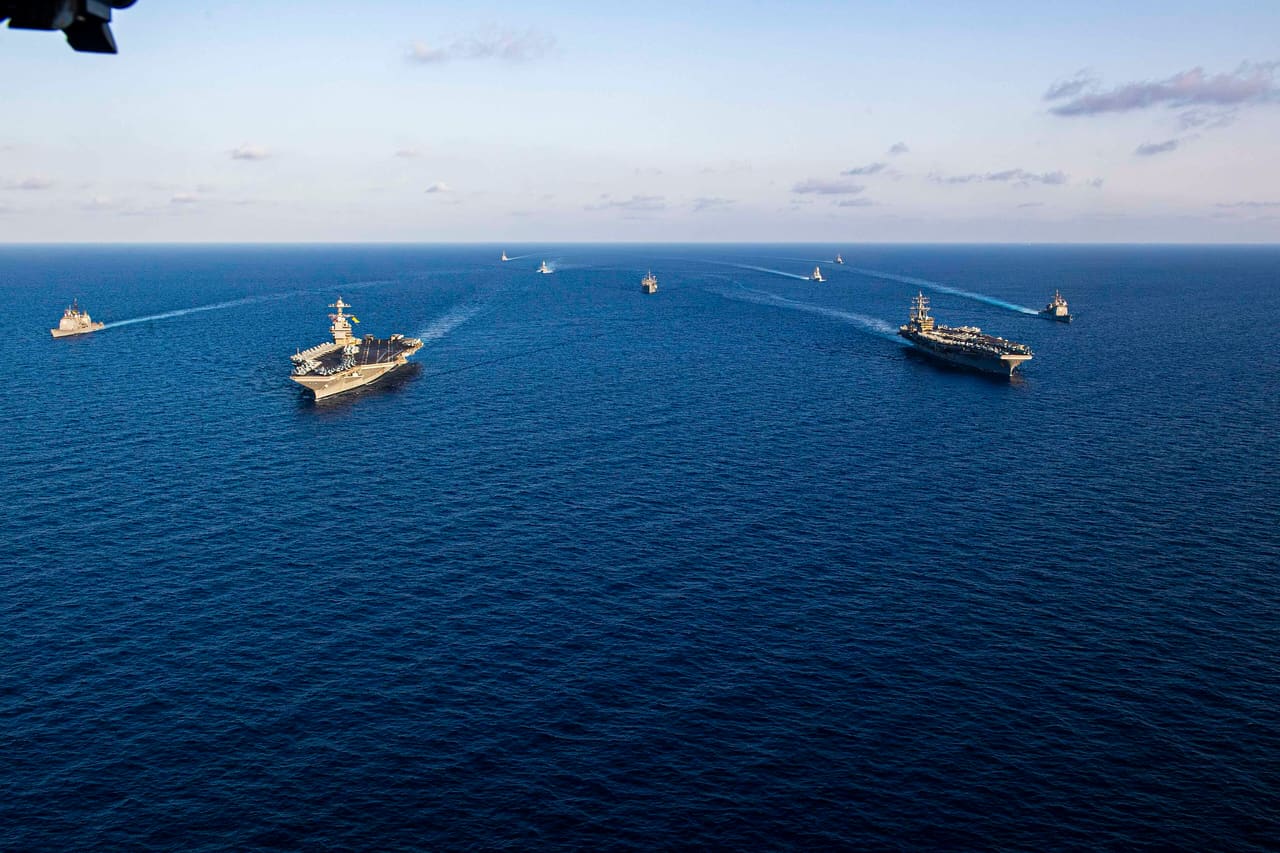
Photo: U.S. Navy photo by Mass Communication Specialist 3rd Class Janae Chambers · Public domain

$954B
US military spending in 2025, about a third of the world total
SIPRI, 2026
32
NATO member countries since Sweden joined in 2024
NATO, 2024
5
US treaty allies in the Asia-Pacific region
White House, 2022
169,589
Active-duty US troops stationed in foreign countries, December 2025
DMDC via USAFacts, 2026
11
Operational aircraft carriers the Navy must keep by law, at minimum
10 U.S.C. § 8062
42%
US share of global exports of major arms, 2021–25
SIPRI, 2026

After 1945 the United States chose to keep a large military, station much of it abroad and bind itself by treaty to defend other countries. That choice still shapes the world today, from NATO's 32 members to the warships that patrol busy sea lanes and the GPS signal in your phone.4 It has also cost trillions of dollars, drawn America into long wars and caused lasting arguments about who should pay.21 This chapter looks at how the system works now, what it costs, where US forces are based and what critics and defenders say about it.

An order built on alliances

The security system the United States built after the Second World War rests on a simple idea: it is better to deter a war than to fight one. Instead of waiting for trouble, the US tied other countries to itself by treaty and kept forces close to likely flashpoints.

The cornerstone is NATO. Twelve countries from Europe and North America signed the North Atlantic Treaty in Washington on 4 April 1949.4 Its core promise, Article 5, says an armed attack against one member "shall be considered an attack against them all". It has been invoked only once, and not to defend Europe: after the 11 September 2001 attacks on the United States. Allies then sent radar surveillance aircraft to patrol American skies and warships to patrol the Mediterranean.5

NATO now has 32 members. Finland joined in April 2023 and Sweden in March 2024, both ending long traditions of military non-alignment after Russia's full-scale invasion of Ukraine in 2022.4 The alliance's first military commander was an American, General Dwight D. Eisenhower, appointed in December 1950.7

In Asia and the Pacific there is no single alliance like NATO. Instead, the US has separate treaties with five regional allies: Japan, South Korea, Australia, the Philippines and Thailand. It also works closely with partners that are not treaty allies, including India, Indonesia, Singapore, Vietnam and Taiwan.8

Behind these treaties sits nuclear deterrence. The US promises to defend its allies with all its forces, including nuclear weapons if necessary. This is called extended deterrence, or the "nuclear umbrella", and one aim is that allies such as Japan, South Korea or Germany feel no need to build bombs of their own.

The Federation of American Scientists estimates that the US had about 3,700 warheads in its military stockpile at the start of 2026, including about 100 non-strategic bombs deployed at bases in Europe. Russia had an estimated 4,400. Nine countries had roughly 12,187 warheads between them, and the US and Russia held about 86% of the total.16

Arms control between them has now lapsed. The New START treaty, which capped both countries' deployed strategic arsenals, expired on 5 February 2026. For the first time in more than half a century, there are no binding limits on the two largest nuclear arsenals.17
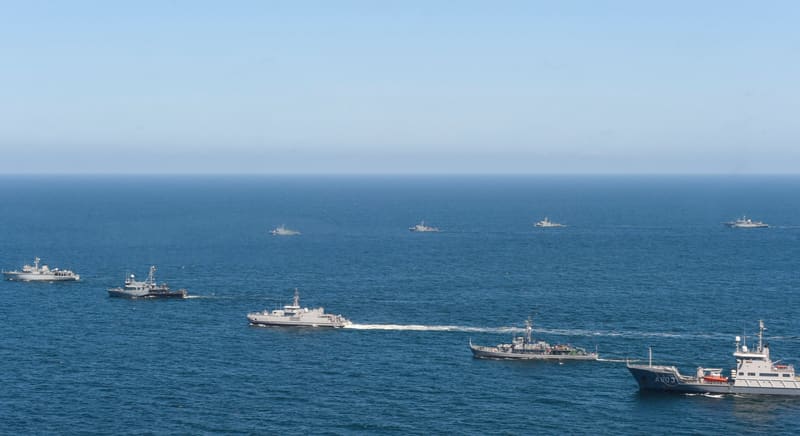
Soldiers and armoured vehicles from several NATO countries during a multinational military exercise
Troops from several NATO countries train together. Joint exercises test whether allies can fight as one force, and are meant to convince rivals not to attack in the first place.Photo: U.S. Navy photo by Mass Communications Specialist 3rd Class Timothy M. Ahearn · Public domain

Who spends the most

World military spending reached a record $2,887 billion in 2025, rising for the 11th year in a row. The US spent $954 billion, about a third of the total and 2.8 times as much as China.1

The biggest military spenders, 2025

Billions of US dollars, current prices

  • United States $954B
  • China (est.) $336B
  • Russia (est.) $190B
  • Germany $114B
  • India $92B
  • United Kingdom $89B
  • Ukraine (est.) $84B
  • Saudi Arabia (est.) $83B
  • France $68B
  • Japan $62B
Source: SIPRI, Trends in World Military Expenditure, 2025, April 2026. Estimates marked (est.).

US spending actually fell by 7.5% in 2025, mainly because no new military aid for Ukraine was approved that year. Fast growth elsewhere, especially in Europe, still pushed the world total up.1

Spending is highly concentrated: the top five countries accounted for 58% of the world total. Some smaller budgets are huge relative to the economy. Russia spent an estimated 7.5% of its GDP on the military in 2025, and Ukraine, defending itself against Russia's invasion, about 40%.1

Figures for China, Russia, Ukraine and Saudi Arabia are SIPRI estimates, because those governments publish incomplete data. Dollar comparisons also ignore differences in wages and prices between countries, so the same sum can buy more in some places than in others.

What the money buys

Measured against the size of its economy, the US now spends far less on defence than during the Cold War. Military spending was 3.1% of GDP in 2025, compared with more than 13% in 1953 during the Korean War and about 9% in 1968 at the height of the Vietnam War.2

The money pays for troops, training, operations, research and weapons. In 2025, for example, the US put $9.9 billion into the Columbia-class submarine, which will carry nuclear missiles, and $13.9 billion into the Virginia-class attack submarine.1

For decades, US presidents of both parties complained that European allies spent too little. In 2014 NATO members agreed to aim for 2% of GDP; only three met that goal that year, but NATO expected all of them to reach it in 2025.6 SIPRI, which counts spending differently, found that 23 of the 32 members reached 2% in 2025.1

Together, NATO's 32 members spent $1,581 billion in 2025, 55% of all military spending on the planet; the 29 European members accounted for $559 billion of that.1 SIPRI warns that NATO's own figures are becoming harder to check, and that looser definitions invite "creative accounting": Italy reportedly tried to count the cost of a bridge to Sicily as defence-related spending.1

In June 2025 the allies went further, agreeing to spend 5% of GDP by 2035, of which at least 3.5% on core defence. European military spending jumped 14% in 2025 to $864 billion. Germany passed 2% of GDP for the first time since 1990, and Poland spent 4.5%, the most in NATO.1

US allies and partners in Asia are spending more as well. Japan raised its military budget by 9.7% in 2025 to $62.2 billion, its highest share of GDP since 1958, driven by concern about China and North Korea. Taiwan increased spending by 14% and pledged to move towards 5% of GDP by 2030.1

In the councils of government, we must guard against the acquisition of unwarranted influence, whether sought or unsought, by the military-industrial complex.
Dwight D. Eisenhowerfarewell address, 1961
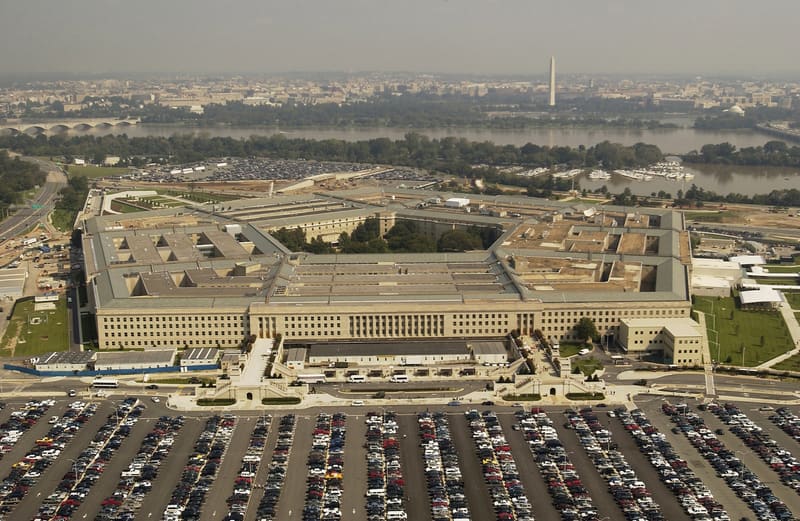
Aerial view of the five-sided Pentagon building
The Pentagon in Arlington, Virginia, headquarters of the US Department of Defense, which manages the largest military budget in the world.Photo: U.S. Navy photo · Public domain

A shrinking share

The US share of world military spending was just over half in the late 2000s, during the wars in Iraq and Afghanistan. It has fallen since then as China and, more recently, Europe spent more.2

Share of world military spending, 1990–2025

Percent of the world total, based on constant 2024 US dollars

0%15%30%45%60% 1990200020102020 United States 33.5%China (est.) 12.1%
United StatesChina (est.)
Source: Calculated from the SIPRI Military Expenditure Database, April 2026 (country spending divided by SIPRI's world total, constant 2024 US$). SIPRI's own 2025 figure at current prices is 33% for the US and 12% for China.

In 2025, world military spending outside the United States grew by 9.2%.1 The balance between regions is shifting too. Between 2016 and 2025 the Americas' share of world military spending fell by 5.5 percentage points, while Europe's share rose by 11 points.1

China's military spending has risen for 31 years in a row, the longest streak of any country in SIPRI's records.1

A smaller share does not mean the US is cutting deeply: after adjusting for inflation, its 2025 spending was still 11% higher than in 2016.1

US forces around the world

At the end of 2025 about 169,600 active-duty US troops were stationed in foreign countries, led by Japan (54,288), Germany (36,436), South Korea (23,495), Italy (12,662) and the United Kingdom (10,156). Counting reservists and Defense Department civilians, the total was 221,599.10 How many bases they use depends on what you count. The Congressional Research Service identified at least 128 overseas bases in at least 51 countries in 2024,9 while researchers using a broader definition of a "base site" counted about 750 in 80 countries and colonies in 2021.11 Explore the map to see major locations and what each one does.

Source: Congressional Research Service, U.S. Overseas Basing (2024); Defense Manpower Data Center troop figures via USAFacts (December 2025); Quincy Institute (2021)

Keeping the sea lanes open

Most goods traded between countries travel by ship, so a few narrow passages matter enormously. The Strait of Hormuz, between Iran and Oman, carried about 20 million barrels of oil a day in 2024, roughly a fifth of global petroleum consumption.13 Only about 7% of US crude oil imports came through it; most of that oil goes to Asia, so keeping the strait open matters even more to other economies than to America's.13

The US Navy is the largest force patrolling these routes, and by law it must keep at least 11 operational aircraft carriers.12 Through its Freedom of Navigation Program, started in 1979, the US protests maritime claims it considers excessive under international law. It does this through diplomacy and by sailing warships through the disputed waters, and it challenges claims made by allies and partners as well as by rivals.14

Guarding sea lanes can also mean fighting over them. Since early 2026 the US has been in an on-and-off war with Iran. Fighting around the Strait of Hormuz has disrupted shipping and pushed up world oil prices, and a ceasefire agreed in June broke down soon afterwards.15

The same ships and aircraft are used for disaster relief. After the March 2011 earthquake and tsunami in Japan, Operation Tomodachi involved more than 24,000 US service members, 189 aircraft and 24 ships. The Navy's 7th Fleet alone flew 160 missions and delivered 260 tons of relief supplies.20 Ships carrying helicopters can reach coastlines where ports and airports have been destroyed.
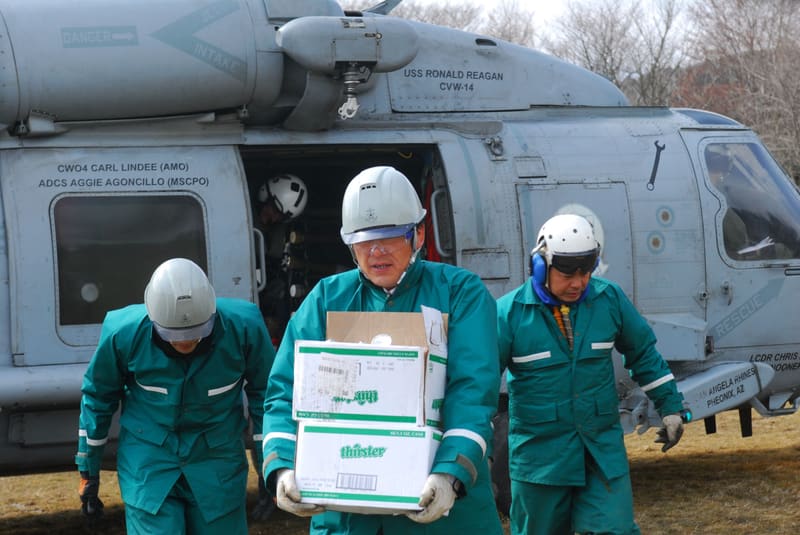
US military personnel unloading boxes of humanitarian relief supplies
US service members deliver aid after a natural disaster. Militaries can move large amounts of help quickly because their ships, aircraft and logistics teams are already on standby.Photo: U.S. Navy photo by Mass Communication Specialist 3rd Class Dylan McCord · Public domain

GPS: a military system everyone uses

The Global Positioning System began as a US military project to tell forces exactly where they were. It is still operated and maintained by the US Space Force. Its satellites fly about 20,200 km above Earth, and the US commits to keeping at least 24 of them working 95% of the time. In mid-2023 there were 31 operational satellites.18

The system works by timing. Each satellite carries very precise clocks and constantly broadcasts the time and its position. A receiver that picks up signals from at least four satellites can calculate where it is from the tiny differences in how long each signal took to arrive.18

For years the military deliberately blurred the civilian signal, a feature called Selective Availability. In May 2000 President Bill Clinton ordered it switched off, to make GPS more useful to civilian and commercial users worldwide. The US government says it has no intent to ever use it again.19

The result is a military system that became an everyday tool for the whole planet. GPS positioning and timing now sit inside phones, aircraft, ships, farm machinery, banks and power grids, used every day by billions of people who will never see a soldier.
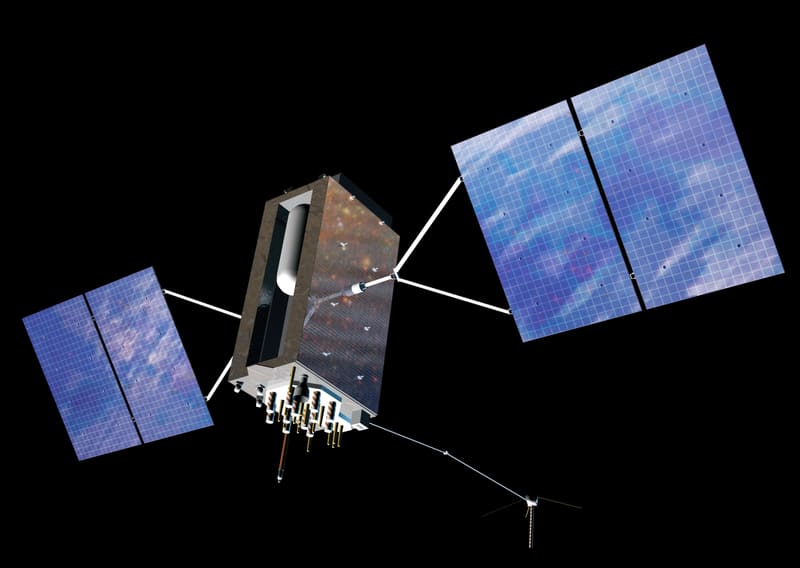
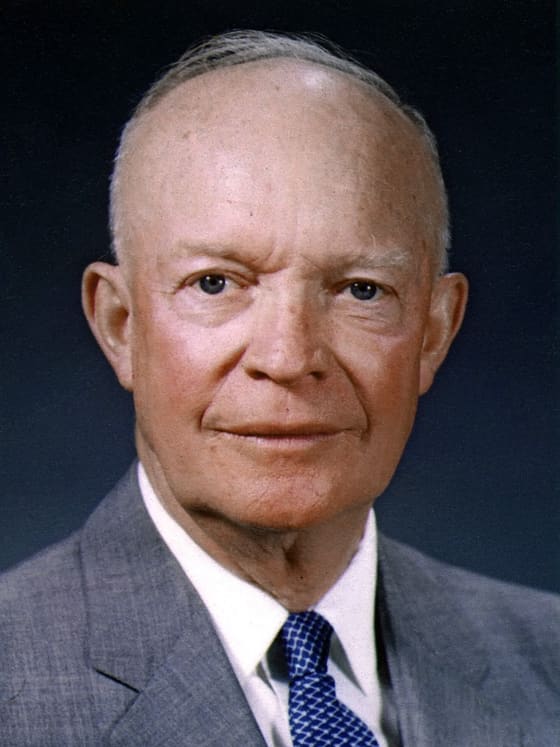
Illustration of a GPS navigation satellite orbiting above Earth
A GPS satellite in orbit. Each one broadcasts precise time signals that receivers on the ground use to work out their position.Photo: U.S. Air Force · Public domain

Timeline

Key moments

From the end of the Second World War to the end of US–Russian nuclear limits.

  1. 1945

    Surrender in Tokyo Bay

    On 2 September Admiral Chester Nimitz signs Japan's surrender for the United States aboard the battleship USS Missouri.24

  2. 1949

    NATO is founded

    Twelve countries from Europe and North America sign the North Atlantic Treaty in Washington on 4 April.4

  3. 1950

    Eisenhower takes command

    In December NATO names General Dwight D. Eisenhower its first Supreme Allied Commander Europe.7

  4. 1961

    A warning from a general

    In his farewell address, President Eisenhower warns against the "unwarranted influence" of the military-industrial complex.22

  5. 1979

    Freedom of Navigation Program

    The US begins formally challenging maritime claims it sees as excessive, through diplomatic protests and naval operations.14

  6. 1991

    The Gulf War

    With Colin Powell as Chairman of the Joint Chiefs of Staff, US-led forces carry out Operation Desert Storm.25

  7. 2000

    GPS opens up

    President Clinton orders Selective Availability switched off, giving civilians worldwide much more accurate GPS.19

  8. 2001

    Article 5 invoked

    After the 11 September attacks, NATO invokes its mutual-defence clause for the first and only time.5

  9. 2011

    Operation Tomodachi

    More than 24,000 US service members help Japan after its earthquake and tsunami.20

  10. 2024

    Sweden joins NATO

    Sweden becomes NATO's 32nd member on 7 March, a year after Finland.4

  11. 2025

    A 5% target

    NATO allies agree to raise defence and security spending to 5% of GDP by 2035.1

  12. 2026

    New START expires

    On 5 February the last treaty limiting US and Russian strategic nuclear arsenals runs out.17

People

People who shaped it

Four Americans whose decisions defined the post-war security system, for better and for worse.

Dwight D. Eisenhower
1890–1969

Dwight D. Eisenhower

First NATO commander; 34th President

The general who led the Allied invasion of Western Europe in the Second World War was chosen in 1950 as NATO's first Supreme Allied Commander Europe.7 As president he expanded US nuclear forces, yet in his 1961 farewell address he warned Americans against the growing influence of the military-industrial complex.22

Photo: White House · Public domain
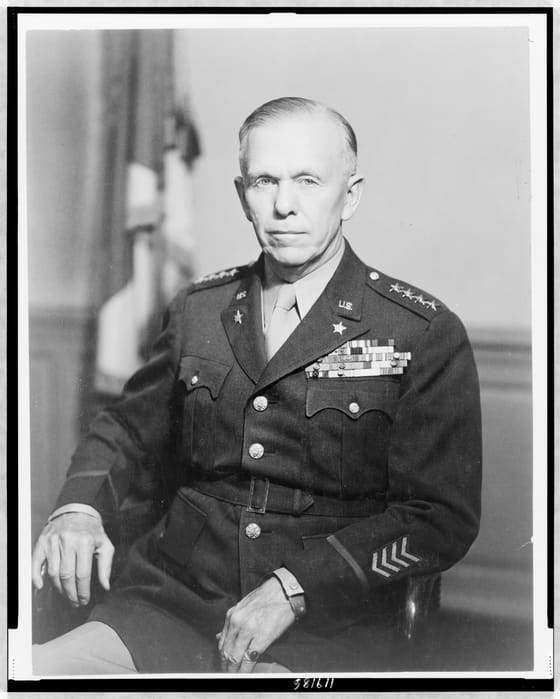
George C. Marshall
1880–1959

George C. Marshall

Army Chief of Staff, Secretary of State and of Defense

Marshall led the US Army through the Second World War as its Chief of Staff, then served as Secretary of State and Secretary of Defense. He believed security also depended on prosperity, and he won the 1953 Nobel Peace Prize for proposing and supervising the plan for Europe's economic recovery.23

Photo: Unknown author (Library of Congress) · Public domain
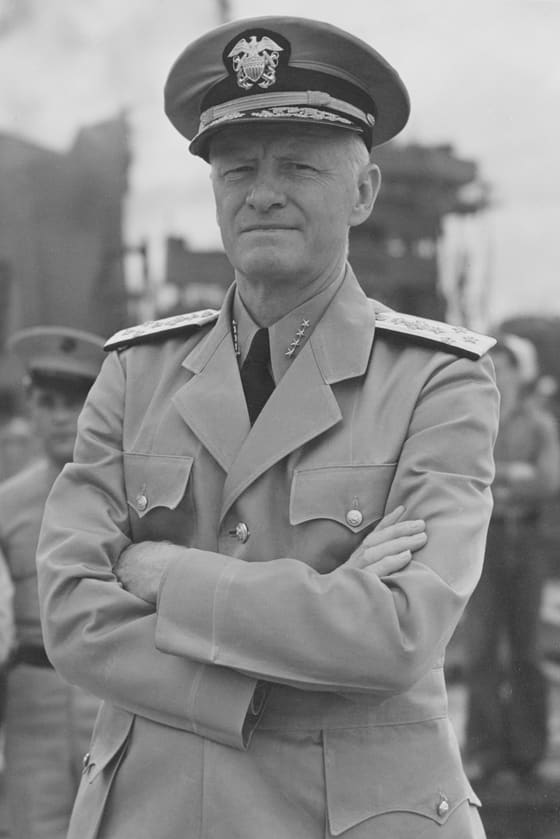
Chester W. Nimitz
1885–1966

Chester W. Nimitz

Commander, US Pacific Fleet

Nimitz took command of the Pacific Fleet in December 1941, just after the attack on Pearl Harbor, and led it throughout the war in the Pacific. Promoted to the new rank of Fleet Admiral in 1944, he signed Japan's surrender for the United States in 1945 and later served as Chief of Naval Operations.24

Photo: USN · Public domain
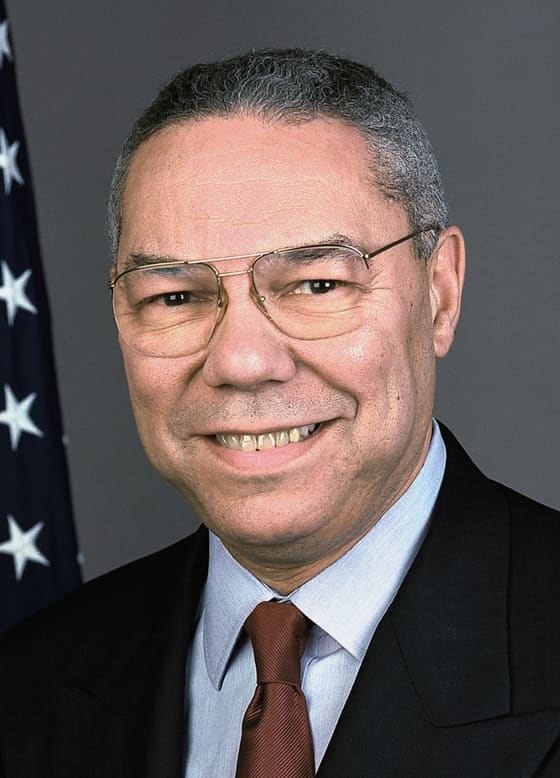
Colin Powell
1937–2021

Colin Powell

Chairman of the Joint Chiefs; Secretary of State

Born in Harlem to Jamaican immigrants, Powell served two tours in Vietnam and chaired the Joint Chiefs of Staff during the 1991 Gulf War. As the first African American Secretary of State, he told the UN in 2003 that Iraq had weapons of mass destruction; some of that intelligence later proved inaccurate.25

Challenges & debates

The debate

America's military role abroad is one of the most argued-about parts of its foreign policy, inside the US and among its allies.

Security policy involves real trade-offs between cost, risk and benefit, and informed people in many countries weigh them differently.

Is the global military role worth what it costs?

Critics argue

The US spent $954 billion on its military in 2025, more than the next six countries combined.1 Critics argue that money could do more good at home, in health, education or paying down debt.

Commitments in dozens of countries risk overextension and can drag the US into conflicts, such as the fighting with Iran around the Strait of Hormuz in 2026.15

Supporters respond

At 3.1% of GDP in 2025, the burden is well below Cold War levels, when it was often above 9%.2

Deterring a major war is far cheaper than fighting one, and forces based abroad can respond to a crisis in hours or days rather than weeks.

Do allies pay their fair share?

Critics argue

For years most NATO members ignored their own 2% target: only three met it in 2014.6

Because allies can rely on US nuclear weapons and key capabilities, critics say they have had little reason to spend more on their own defence.

Supporters respond

Allies are now spending much more: European military spending rose 14% in 2025, and NATO agreed a 5% of GDP target for 2035.1

Alliances also serve US interests. The only time NATO invoked Article 5, it was to stand by the United States after 9/11.5

What does the record of US interventions show?

Critics argue

Vietnam, Iraq and Afghanistan were long wars that fell short of their original goals. The post-9/11 wars alone cost the US more than $8 trillion through 2021.21

An estimated 905,000 to 940,000 people had died from direct war violence in post-9/11 war zones by 2023, more than 400,000 of them civilians.21 The Iraq invasion was justified partly with intelligence later found to be inaccurate.25

Supporters respond

Some interventions achieved their aims, such as the 1991 Gulf War, which forced Iraqi troops out of Kuwait.

Supporters argue that the wider alliance system has helped prevent a direct war between great powers for eight decades, and that failures in counter-insurgency do not cancel that record.

Should the US sell so many weapons abroad?

Critics argue

The US supplied 42% of the world's major arms exports in 2021–25.3 Critics object to sales to governments accused of human rights abuses.

Weapons can fuel regional arms races and are hard to control once they change hands.

Supporters respond

Arming allies helps them defend themselves. Ukraine, fighting Russia's invasion, received 9.7% of all global arms imports in 2021–25, much of it from the US and Europe.3

Sales support American jobs and industry, and allies using compatible equipment can operate together more easily.

Did you know?

Did you know?

1 in 3

Roughly one in every three dollars spent on the military worldwide in 2025 was spent by the United States.1

2.8×

How much more the US spent on its military than China in 2025, down from 3.2 times in 2024.1

1

The number of times NATO has invoked Article 5, its mutual-defence clause: after the 11 September 2001 attacks on the US.5

~20%

Share of global petroleum consumption that passed through the narrow Strait of Hormuz in 2024.13

Sources

Where the numbers come from

Every figure on this page links to a primary or reputable source. Numbers are the latest available at the time of writing.

  1. SIPRI, Trends in World Military Expenditure, 2025 (Fact Sheet), April 2026 — sipri.org
  2. SIPRI Military Expenditure Database, 1949–2025, updated 27 April 2026 — sipri.org
  3. SIPRI, Trends in International Arms Transfers, 2025 (Fact Sheet), March 2026 — sipri.org
  4. NATO, NATO member countries, 2024 — nato.int
  5. NATO, Collective defence and Article 5 — nato.int
  6. NATO, Defence Expenditure of NATO Countries (2014–2025), August 2025 — nato.int
  7. NATO, The North Atlantic Council appoints General Dwight D. Eisenhower to be the first SACEUR, 19 December 1950 — nato.int
  8. The White House, Indo-Pacific Strategy of the United States, February 2022 — bidenwhitehouse.archives.gov
  9. Congressional Research Service, U.S. Overseas Basing: Background and Issues for Congress (R48123), July 2024 — congress.gov
  10. USAFacts, Where are US military members stationed? (Defense Manpower Data Center data as of 31 December 2025) — usafacts.org
  11. Vine, Deppen and Bolger, Drawdown: Improving U.S. and Global Security Through Military Base Closures Abroad, Quincy Institute, 2021 — quincyinst.org
  12. 10 U.S. Code § 8062, Navy: composition; functions (Cornell LII) — law.cornell.edu
  13. US Energy Information Administration, Amid regional conflict, the Strait of Hormuz remains critical oil chokepoint, 2025 — eia.gov
  14. US Department of Defense (War), Annual Freedom of Navigation Report, Fiscal Year 2025 — policy.war.gov
  15. Associated Press via NPR, U.S. military strikes Iran, while Trump vows more for Tehran's retaliation, 2 September 2026 — npr.org
  16. Federation of American Scientists, Status of World Nuclear Forces, 2026 — fas.org
  17. United Nations Secretary-General, Statement on the expiration of the New START Treaty, 5 February 2026 — un.org
  18. GPS.gov, Space Segment — gps.gov
  19. GPS.gov, Selective Availability — archive.gps.gov
  20. DVIDS, USS Ronald Reagan reflects on the 10-year anniversary of Operation Tomodachi, 2021 — dvidshub.net
  21. Costs of War Project, Brown University, Fact Sheet: The True Costs of the Post-9/11 Wars, 2026 — costsofwar.watson.brown.edu
  22. National Archives, President Dwight D. Eisenhower's Farewell Address (1961) — archives.gov
  23. Nobel Foundation, George C. Marshall – Facts, Nobel Peace Prize 1953 — nobelprize.org
  24. Naval History and Heritage Command, Fleet Admiral Chester W. Nimitz — history.navy.mil
  25. US Department of State, Office of the Historian, Colin Luther Powell — history.state.gov

Think you know it?

Test yourself with questions from this chapter — with explanations after every answer.